2026: Sensorial Cosmologies and Cultural Resistance in Latin America
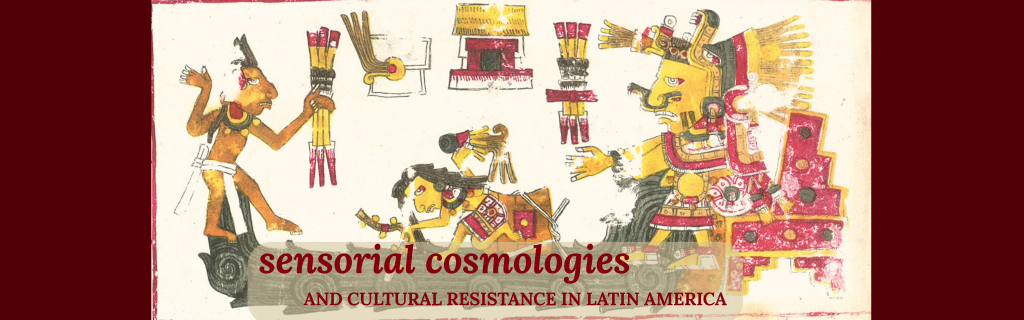
On the Edge Symposium 2026
Center for the Study of Religion, Culture, and Society
ÂÒÂ×ÊÓƵ (NC)
Feb. 18-20, 2026
2026 Symposium: Sensorial Cosmologies and Cultural Resistance in Latin America
The 2026 “On the Edgeâ€� symposium hosted by CSRCS at ÂÒÂ×ÊÓƵ hosted more than scholars for collective conversations about political strategies, activism, and theoretical interventions against cultural homogenization in Latin America and the Caribbean.
Call for Proposals: The ongoing epistemicide of Indigenous and Afro-Caribbean worldviews, alongside processes of land and labor exploitation, reinforces structural inequalities related to class, gender, race, and the environment. We call for active reflection and civic engagement on these intersectional issues to create a meaningful dialogue for social change.
The symposium will foster interdisciplinary discussions on alternatives to enduring forms of exclusion, contextualizing multiple sensorial cosmologies as forms of resilience. Sensorial Cosmologies, broadly understood as experiences that incorporate the senses for an immersive worldview, considers how Indigenous communities, mestizos, Latinx, and other underrepresented minorities have mobilized and provoked transcultural exchanges that reconfigured the continent known as Abya Yala.
We invite presentations that feature the heterogeneous archive of counternarratives and cultural resistance from Indigenous cosmogonies, religious and theological movements of liberation, artistic interventions for intersectional eco-feminism and grassroots activism. We encourage submissions related to, but not limited to, the following broad themes:
Religion, cosmologies, and critical theory
Scholarly works addressing Indigenous cosmologies, diverse religions, and critical theory in Latin America and the Caribbean. These works may explore how Indigenous worldviews, philosophy, and theological thought have impacted cultural production and sensorial regimes in the colonial and post-colonial era. We welcome research inclusive of visual arts, music, oral traditions, and literature from the region.
Gender Justice and Eco-Feminism
We consider the urgency of pursuing gender justice and invite presentations that analyze the role of feminist politics in contesting authoritarianism and its impact on the environment. In what ways have religious practices, historical events, and cultural plurality influenced (eco)feminist social movements? Environmental activists, Indigenous and Afro-Caribbean leaders, artists, and reproductive justice advocates are transversed by public policies addressing gender inequality, the feminization of poverty, and violence against women. We welcome perspectives on feminist artistic practices in Latin America that illuminate dynamics of gender and environmental justice.
Migrations from the Global South and racial inequality in the USA
We encourage submissions of scholarly works and community-based projects around migration and racial justice in the Americas/Abya Yala. The symposium will hold conversations on diaspora from the Global South to the United States, Canada, and Europe, as well as migrations within Latin America. We encourage presentations on strategic collective responses to historical and contemporary migratory phenomena, considering border cultures, forced displacement, deportations, refugees’ human rights, and the social challenges faced by Latinx communities.
ÂÒÂ×ÊÓƵ Faculty Conveners
Federico Pous, Associate Professor of Spanish
Leyla Savloff, Assistant Professor of Anthropology
Juan Leal Ugalde, Associate Professor of Spanish
Keynote
Ana M. Ochoa Gautier
Tulane University
“Contemporary Audiovisuality as a Site of Cosmological Inscription”
For the past twenty years or so I have been participating in different curatorial and collaborative research opportunities with indigenous film-makers in South America, mostly northern Colombia. These forms of curation have been based on oral histories, on-line exchanges or in the politics of event organization and have mostly, but not exclusively, taken place with the Wiwa of the Sierra Nevada in northern Colombia. Recent indigenous film production in Latin America has been analyzed mostly as a site of resistance. Yet, despite the fact that sound is crucial to indigenous cultures, seldom has the sound of film, which is still understood primarily as a preeminently visual form, been analyzed as crucial to such productions. Meanwhile, sound art has arisen as a major site of collaboration and artistic production throughout Latin America, frequently associated to political questions of extractivism and climate change. All this has taken place amidst a major change of digital rights in Latin America. Â This paper explores how we can think of the concept of sensorial cosmologies (or of cosmology and its relation to the senses) through forms and formats of production that combine the aural, the oral and the visual in times of changing digital technologies. The paper places particular emphasis on the politics of sound design as a site of inscription of contemporary changing notions of the cosmological and the living in the digital realm.
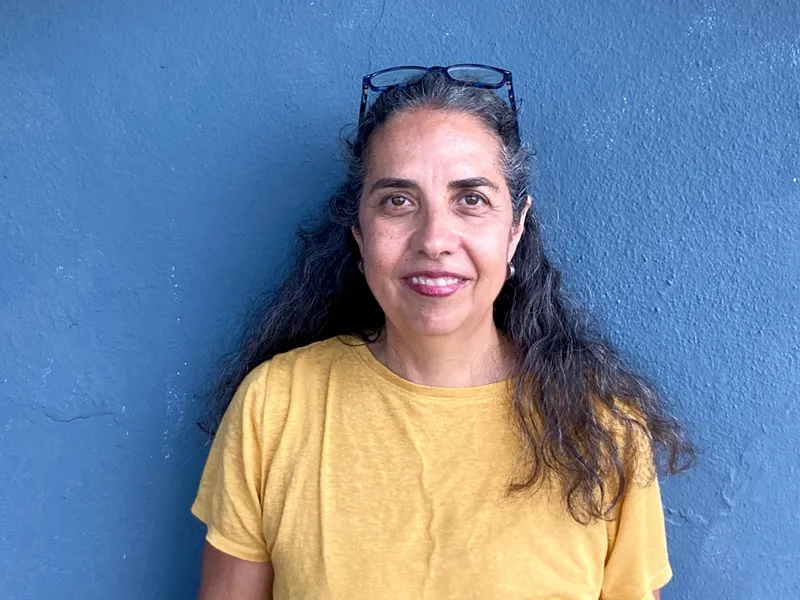 Ana MarÃa Ochoa is a professor in the Newcomb Department of Music, the Department of Communication and the Department of Spanish and Portuguese. Her work is on histories of listening and the decolonial, on sound studies and climate change, and on the relationship between the creative industries, the literary and the sonic in Latin America and the Caribbean. Her current projects explore the bioacoustics of life and death in colonial histories of the Americas and the relationship between sound, climate change and the colonial. She has been a Distinguished Greenleaf Scholar in Residence at Tulane University (2016) and a Guggenheim Fellow (2007-2008). She has served on the advisory boards of the Society for Cultural Anthropology, and the Smithsonian Center for Folklife and Cultural Heritage. Her book, Aurality, Listening and Knowledge in Nineteenth-Century Colombia (Duke University Press, 2014) was awarded the Alan Merriam Prize by the Society for Ethnomusicology. She is also the author of Músicas locales en tiempos de globalización (Buenos Aires: Norma 2003) and Entre los Deseos y los Derechos: Un Ensayo CrÃtico sobre PolÃticas Culturales (Bogotá: Ministerio de cultura, 2003) and numerous articles in Spanish and English. Her book La Vida de los Sonidos is currently in print with Editorial Mimesis in Chile.
2026 Speakers and Presenters
Federico Pous (ÂÒÂ×ÊÓƵ)
Veronica Garibotto (University of North Carolina at Chapel Hill)
Angelica Serna (Duke University)
Andrea EcheverrÃa (Wake Forest University)
Joshua Shapero (Duke University)
Ana M. Ochoa Gautier (Tulane University)
Nicolas Aguia Betancourt (The Ohio State University)
Stephen Bloch-Schulman (ÂÒÂ×ÊÓƵ)
Pablo G. Celis-Castillo (ÂÒÂ×ÊÓƵ)
Maria Isabel Gervasi (The University of North Carolina at Chapel Hill)
Daniel Castelblanco (ÂÒÂ×ÊÓƵ)
Nadia Villafuerte (University of California, San Diego)
Diana Marcela Solano (Florida International University)
Juan Andrés Suárez Ontaneda (Bryn Mawr College)
Laura Rojas (Independent Scholar)
Paulo Andre Suarez Rojas (The Graduate Center, City University of New York)
Israel Perez Medina (The University of North Carolina at Chapel Hill)